03 - Articles de mars 2007
Dernier ajout : 31 mars 2007.
Articles de cette rubrique
-
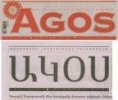
Agos, toujours en état de choc
20 mars 2007, parSource : Le Figaro, 03/02/2007
Le journal de la communauté arménienne est toujours en état de choc.
Des pancartes brandies au cours des funérailles de Hrant Dink qui ont rassemblé 100 000 personnes à Istanbul, sont encore entassées dans l’entrée. Les locaux exigus de l’hebdomadaire Agos sont plongés dans le deuil. Entourés de bouquets et de portraits de leur rédacteur en chef, les journalistes se noient dans le travail. Les derniers exemplaires en partance pour l’Australie, la France ou les (...) -
‘Pro-Western Kemalists’: A Western illusion
19 March 2007, bySource : Today’s Zaman, 15/03/2007
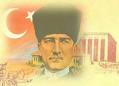
In an article that appeared in the Daily Star, an Oxford University expert on Turkish foreign policy, Philip Robins, raised the question of whether a Justice and Development Party (AK Party) government in its second term might “seek serious Islamist-oriented policy revisions” in its foreign policy. Such an expectation wrongly assumes that the Kemalist establishment is still committed to a Western-modeled Turkey and thus that alternative political movements, (...) -
Foreign Affairs : a new battleground between government and establishment
17 March 2007, bySource : Today’s zaman, 15/03/2007
President Ahmet Necdet Sezer’s refusal to sign a decree envisaging the appointment of five deputy undersecretaries for the Foreign Ministry, the first of its kind in the history of the republic as described by the daily newspaper Hürriyet in its March 14 edition, has revealed an ongoing battle at the Foreign Ministry between the political leadership and the establishment.
President Sezer, regarded as the mouthpiece of the establishment that prefers to rule (...) -

The ethnic structure of Turkishness
16 March 2007, bySource : Today’s Zaman, 14/03/2007
Turkey’s ethnic and religious structure has always been a matter of controversy. For some reason or another, the heterogeneous demographic structures of the US, Canada and Australia, where numerous different ethnicities, religious groups and races have only recently gathered together to create a patchwork-like social design, do not attract attention, whereas the ethnic and religious structure of Turkey with its long past of peaceful coexistence is taken (...) -
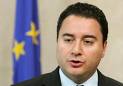
EU’s soft power is defunct in Turkey
15 March 2007, bySource : Today’s Zaman, 07/03/2007
At the end of last week, the think tank where I work in Brussels — the European Policy Centre — held a breakfast meeting with Turkey’s chief negotiator for the EU, Ali Babacan, at which he gave a presentation on “Turkey and the EU: Relations, Negotiations and Challenges Ahead.” This was the first time I had heard Babacan speak in English for quite some time and I was impressed. He delivered an impressive and information-packed speech to a captivated audience (...) -

Turkey - EU : underwater negotiations
14 March 2007, bySource : TNA, 03/07/2007
Turkish-European Union relations are a very passionate topic both in Turkey and in the EU countries. In the EU most politicians are very pleased to express their views about Turkish-EU relations and the accession negotiations. Why ? Because most of them have no idea about other important topics such as how to fight unemployment, how to maintain the social security system or at least a certain social wellness for the EU citizens. Talking about Turkey is a much (...) -
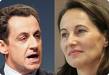
France’s elections, Turkey’s choice
13 March 2007, bySource : Today’s zaman
As the president has important powers in the French political system, the winner of the presidential elections this May is important not only for France but also for many other countries.
The rightist UMP candidate Nicolas Sarkozy, who says that “Together Everything is Possible,” seems to receive the support of the conservative sectors of the electorate. He wants to restore France’s former power and importance. But having said that, he seems to be supportive of a (...) -

Economie : le miracle turc ?
12 mars 2007, parSource : Boursorama.com
Miracle turc ? « Ces dernières années, la Turquie a fait d’énormes progrès sur la voie de la stabilité macroéconomique et de la croissance. Sa Banque centrale, de plus en plus crédible, a réussi à contrôler l’inflation, la ramenant des sommets de plus de 100% par an atteints au milieu des années 90, à 9,6% en 2006 », explique Magda Branet, stratégiste Europe émergente et Turquie chez Axa Investment Managers. Pour maintenir la confiance des investisseurs après la correction de mai (...) -
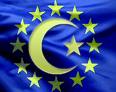
Turkey between Europe and the Islamic World
10 March 2007, bySource : qantara.de
The rapprochement of Turkey with the EU could have positive repercussions on European relations with the Arab-Islamic world, says Lebanese expert on Turkish Studies Muhammad Noureddine.
For four hundred years the Arab world was an integral part of the Ottoman Empire, and Arabs were the last ethnic group to demand independence from the Ottoman center. But after the First World War ended with the defeat of the Ottoman Empire, a dark chapter of tense relations began (...) -

Turquie : mettre aujourd’hui l’adhésion de côté pour laisser une chance à la Turquie
9 mars 2007, parSource : Le Figaro, 06/03/2007
Dora Bakoyannis est la ministre grecque des Affaires Etrangères, maire d’Athènes avant sa nomination au gouvernement. Réputée pour ses positions réformatrices et turcophiles au sein de la droite grecque, son arrivée à la tête de la diplomatie grecque a d’abord inquiété les nationalistes chypriotes grecs tendance EOKA, et notamment le Président chypriote, Papadopoulos. Depuis, la Turquie s’est engagée à signer un protocole insignable (sur l’ouverture des ports et des (...)

 RSS 2.0